What it’s really like contributing to a major branding project as a junior designer
Chapters
Starting out as a junior, you might be asked to pitch in on a bigger project – landing your first design job doesn’t necessarily mean you’ll be waiting years before you’re trusted with more important work.
When independent, employee-owned design studio Stocks Taylor Benson (STB Design) set out to reposition itself through a new website, Junior Designer Alex Finlayson worked alongside Creative Partner Dan Sweeney on the project. Here, they both reflect on what it's really like to contribute to a major branding project early in your career, from building trust and taking on responsibility to bringing a fresh perspective to the table.
Getting involved
When STB Design began rethinking its website, Alex was just nine months into his first full-time role. What started as an opportunity to bring motion to the site quickly grew into a chance to shape how the studio presented itself, while giving him a behind-the-scenes look at how a major internal project comes together.
Alex, can you tell us a little about yourself and your role at STB Design?
Alex: I'm a 22-year-old graphic designer from Leicester. Following my graduation from De Montfort University in 2025 and an extended internship at STB, I'm now nine months into my role as a junior graphic designer.
Dan, can you introduce yourself and your role at STB Design?
Dan: I'm one of the Creative Partners at STB. My role is quite varied but typically involves overseeing projects as they come in and out of the studio, pitching for new work, directing other team members, and presenting work to clients. But I still do a lot of design in my day-to-day, which keeps me on my toes.
Alex, how did you become involved in the website rebrand, and what were your main responsibilities throughout the project?
Alex: I became involved in the website rebrand after being tasked with bringing some of the website pages to life. I'm a keen animator and have always pushed to do motion in my work. Motion graphics remained one of my key responsibilities throughout the project, along with designing the work pages.
I was also really keen to improve how the website functioned, from understanding the backend to improving our workflow and finding ways to present some of our older projects in a more modern and engaging way.
Dan, what prompted the decision to rebrand the studio's website, and what were the key goals?
Dan: We've been doing a lot of work on repositioning ourselves as a design studio recently. The past few years have seen us grow and evolve, so we wanted to make sure that was reflected in how we presented ourselves.
Being commercial – as well as creative – has always been important to us, but we felt we weren't shouting loud enough about the strategic side of things and how it underpins everything we produce. So really, the website became a shop window to say all of that.
Taking on responsibility
Being part of a major project isn't just about following directions. From tackling technical challenges to taking ownership of different parts of the project, Alex's responsibilities evolved throughout the process. Dan explains why involving junior designers in meaningful work can strengthen both the project and the people working on it.
Alex, was there a particular part of the rebrand that challenged you the most? How did you work through it?
Alex: We do a lot of packaging, so our work is heavily geared towards print. One of the biggest challenges for me was finding ways to bring this print-based work to life through motion.
I often overcame this through experimentation, breaking files apart and finding different ways to build the animations. This was often through trial and error, and help from our senior motion graphics designer, Shervin. This pushed me to think about how static designs could work in a different format.
I also learnt a lot about colour profiles, particularly how to keep colours looking consistent across web and print.
Dan, what do you feel was the value of involving a junior designer in this project?
Dan: I think there was a huge amount of value in involving Alex. Often the trickiest thing for juniors to grasp is how a busy design studio operates, both internally and externally. Working on the website gave him a really good overview of both.
Going deep into our folio of past work gave him the chance to see all the clients we've worked with and the outcomes of projects, but also, from a practical point of view, how things are organised, stored and archived. It's not the most glamorous side of what we do, but it's an important aspect of the job to understand – especially for juniors.
Dan, how did you divide responsibilities with Alex throughout the process?
Dan: The website was a real team effort all round, but Alex was instrumental in keeping the momentum going. Internal studio work is always tricky to keep on top of, especially when you're busy with client work, so having Alex consistently in touch with it really helped.
My role was to make sure he had everything he needed to do the job and oversee the overall design to keep it moving in the right direction. We often work with hand-drawn scamps (rough, preliminary sketches) at the initial stages of a project, so a big part of Alex's job was interpreting them, finding the assets and working them up into final designs.
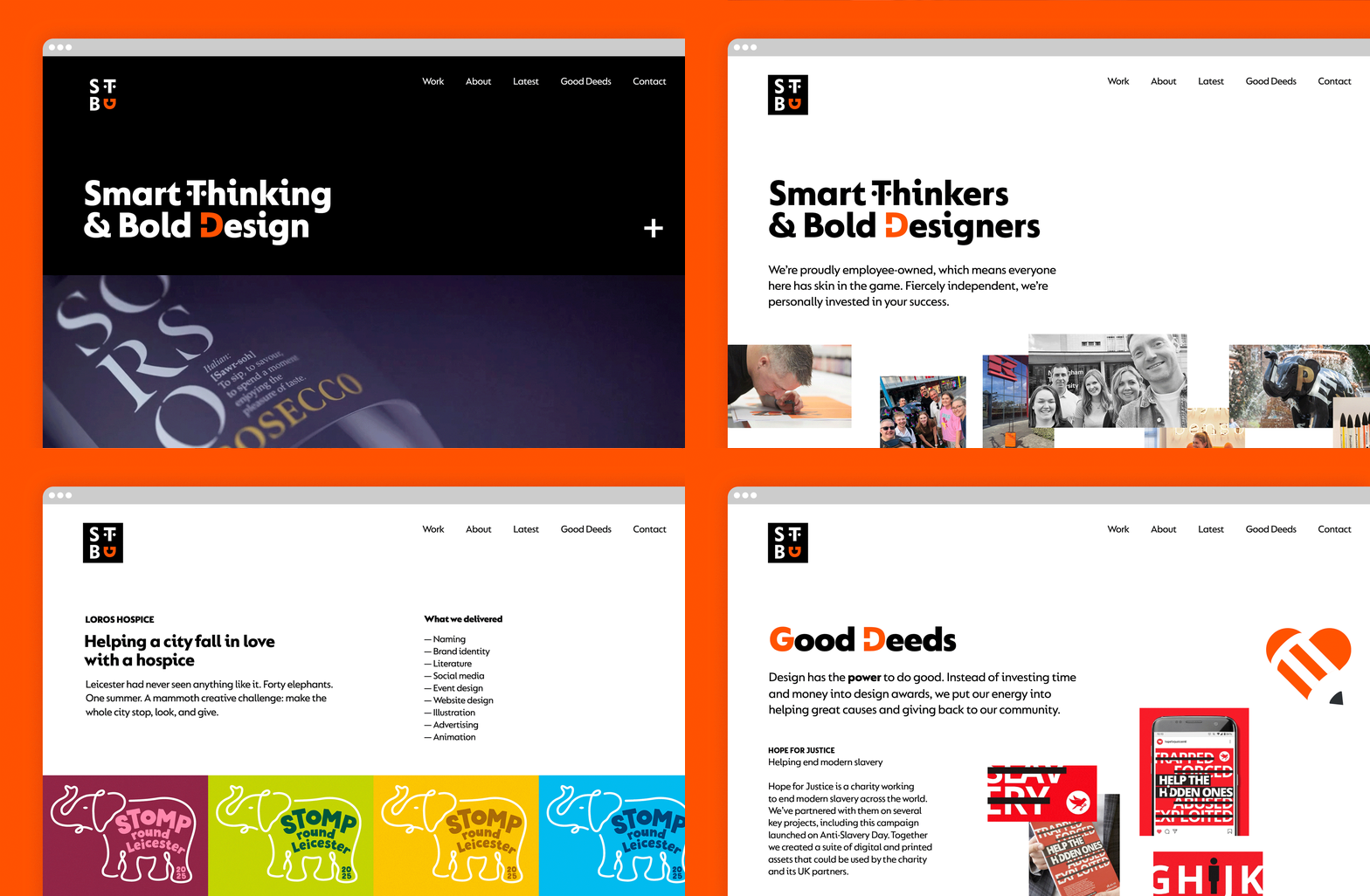
The new STB website
Building trust
Working on a major project isn't just about learning new technical skills. It's also about building confidence, earning trust and realising your perspective has value. Alex and Dan reflect on how their working relationship developed and why junior designers can have a meaningful impact on projects like this.
Alex, what surprised you about working on such a significant studio project? Was anything different from what you expected?
Alex: The scale of the project surprised me the most, and how much time and dedication goes into something like a website rebrand.
Client work naturally takes priority, so I had to learn to manage my workload better and find time to work on the website alongside everything else. It gave me a better understanding of how a project like this develops over time.
Working on the website also gave me the opportunity to look through lots of legacy projects that I hadn't otherwise seen before. This really demonstrated the variety of work we've produced over the years. It also gave me a better insight into how the business works and the considerations that go into deciding what we can and should show on the website.
Alex, what did you learn from working so closely with Dan throughout the process?
Alex: Working so closely with Dan allowed me to build trust with him, which made me much more confident presenting work back to him. It also gave me an insight into his thinking process and his way of working.
I think the process also taught Dan a lot about me as a designer and my skills. It meant he could set me tasks he knew I could complete, while also knowing where to push me. In turn, that gave me confidence in my own abilities, knowing he trusted me to take on those responsibilities independently.
Dan, were there any moments where Alex brought a fresh perspective or challenged your thinking?
Dan: One of the best things about junior designers is that they bring fresh perspectives. Alex was particularly helpful during the development stage, finding more efficient ways to upload and populate the new site and discovering little hacks to streamline the process.
One specific example was that he found a plugin that automatically deleted duplicated assets in the website media library, making the site much less heavy and cumbersome to work with.
Looking back
By the end of the project, both Alex and Dan had taken away more than just a new website. They reflect on the experience and share their advice for junior designers stepping into bigger opportunities.
Alex, how has this project changed your confidence or approach as a designer?
Alex: I feel I understand our brand much better, which has given me more confidence in my decisions as a designer. This project really taught me to look at the bigger picture.
When working on the website, it often felt like a collection of individual projects, with pages designed around completely different brands and pieces of work. Working on the rebrand made me realise that, while each page needs to work on its own, it's still part of one overall website. Sometimes you have to take a step back and think about how they're all working together.
Alex, what advice would you give other junior designers hoping to get involved in larger or more high-profile projects?
Alex: I don't want to sound clichéd, but don't be afraid and believe in yourself. Put yourself out there and take the opportunities that come your way. It can feel intimidating working on larger projects, but you're there for a reason.
Don't be afraid to offer your opinion, too. As a junior you offer a different, fresher perspective, where you can challenge the norms.
Dan, what advice would you give senior creatives looking to create meaningful learning opportunities for junior designers working on live projects?
Dan: The beauty of Alex working on this particular project was that it gave him a small taste of everything we do, and a much stronger understanding of our repositioning and where we're heading.
Often client work can be knotty and nuanced, so while it's great experience for juniors, it doesn't always give them the breadth of understanding a big internal studio project like this does. For juniors, that's really important – it gives them a sense of place and provides a solid foundation to develop and grow into their role.


